
Leaders of teams cannot afford to overlook the science of human behaviour – which can provide evidence-based solutions to common people challenges – including identity.
Organisational success is not only driven by strategy and resources but also by the unseen impact of individual and group behaviour.
Group behaviours are the patterns of interaction, attitudes and actions that emerge when individuals come together as a team or unit within a workplace. They reflect the shared norms, roles, values and dynamics that shape how the group operates and performs.
These behaviours can be formal (aligned with organisational policies, goals, and processes) or informal (driven by unwritten rules, social bonds, or cultural influences).
Culture change is all about changing the ‘way we do things around here‘ is often unsuccessful, because leaders or change makers miss some fundamentals about human behaviour. Which is why we want to share an overview of Social Identity Theory and provide some powerful insights for leaders to harness the power of psychology to make a real difference.
In a theory originally developed by Henri Tajfel and John Turner, this theory, their research highlights some key messages:
Why People Think of ‘Us’ Versus ‘Them’
Because Social Identity Theory explains how people define themselves by the groups they belong to. These groups could be a department, profession or organisation as a whole.
These groups could also be anything from the eight protected characteristics to a football team which people choose to support because:
1. Identity is through Membership
This means you are part of a group, which may be by choice or by circumstance, and employees derive pride, motivation and meaning from their in-groups.
It means that people, either visibly or invisibly, belong to a group which can be identified as different to others e.g. we are in finance, or we work at X company. This leads to different dynamics between people, depending on whether you are in a group or out of a group.
2. In-group & Out-group Dynamics
Loyalty to one group, can intentionally or unintentionally, fuel competition or division. Think of football team supporters.Wearing shirts, waving scarves or flags. This is all intentional behaviour to identify with a certain group. Competition is fuelled through performance, and identity stretches ‘off’ the pitch.
With people in work (e.g. in Manchester where Think HQ is based where a question of are you red or blue is often second only to “how are you?” when people meet) becoming linked through which team they support.
3. Emotional Connections
Being in a group, or out of a group, can provide strong emotional connections and explain people’s identities.
With a recent client there was a clear disconnect between regional offices versus the head office. This led to polarised opinions and divisions when one group (the regions) felt unfairly treated compared to the other (head office).
Despite many people experiencing fair treatment, the perceptions soon grew based on the stories being circulated, which led to a growing “them versus us” group mentality which quickly became divisive when resources became scarce.
How Does Our Board Balance The Power Of Team Identity With The Need For A Cohesive Culture?
Organisational cultures often hinge on in versus out groups. They deliberately promote the group of one organisation over another, enticing employees to join their business over others because ‘their culture is better’.
In fact, organisational culture and engagement hinge on fostering a strong, inclusive “one company” identity.
But what is the risk to this?
And how do leaders utilise the psychological theories which underpin human behaviour?
Social Identity During Mergers & Acquisitions
Restructures, mergers and acquisitions often fail to realise the predicted benefits due to identity clashes, not just strategy missteps. This is because people don’t just work for organisations, they identify with them.
Employees derive part of their concept of self from their organisations brand, history, values and culture. Then when two companies, or teams, come together they can feel that their identity is being challenged, lost or replaced.
This can lead to disengagement, and negative behaviours, as when people don’t recognise themselves in this new organisation they no longer feel like ‘themselves’.
Resistance and then attrition can follow, which leads to further division, as groups often blame each other for negative events which happen.
This categorisation of ‘us’ versus ‘them’, shows up during M&A through the acquirer versus the acquired, or the new company versus the old.
Behaviours and expectations are often different and without an aligned culture plan to create a new cohesive vision built up from the best elements of both groups, employees begin to vie for their ‘way of working’ to win.
This dynamic fuels siloed behaviours and internal competition then undermines integration efforts.
Culture Clashes Are Identity Clashes
Research, history and the teams experiences of M&As show failures are rarely about the financials or strategy.
They usually stem from cultural misalignment. Symbols, rituals, language and even leadership styles all represent identity markers of different groups. When these conflict, employees resist adopting the new way because it threatens their sense of belonging.
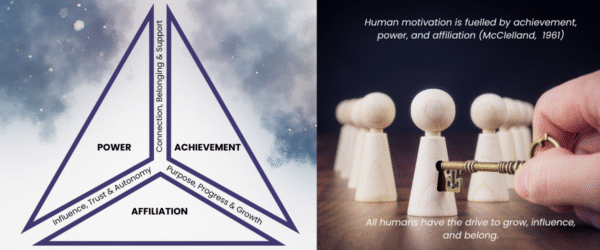
And all humans need to feel like they belong, that is how we have survived.
Leadership behaviours often signal whose identity ‘wins’, which causes greater unrest. Especially if leaders only promote or highlight one ‘sides’ history, practices and talent.
Employees from the other side may feel erased, or under-valued, which causes further ‘in’ group and ‘out’ group conflict.
However, when leaders consciously blend identities, honouring the best of both and co-creating a shared ‘new we’ then integration succeeds, and the two groups become a new improved group with a new identity.
The Cost of Culture
Losing our sense of identity leads to higher employee turnover, especially with top talent, however there are many other costs of culture clashes.
Employees who are disengaged contribute less in terms of discretionary effort, as well as lower productivity and outputs. Customers can also pick up on internal pressures, fractures between teams or organisations creating a weakening of brand trust. Especially when customers may be feeling a similar loss of identity – like when Somerfield and the Co-op merged. Many customers had chosen to shop at Somerfield stores over Co-ops, but then they became one. Taking choice away for many customers.
Steps Leaders Can Take
Whether change is needed, teams are merging or there are large-scale acquisitions, all leaders can take the following steps to harness the psychology behind humans needing to be in groups, and our social identities.
1. Acknowledge Identity & Identities
Culture is not a soft issue, or something which is ‘fluffy’. It is measurable and strategic and belonging is a fundamental need of all humans.
Taking steps to acknowledge identities, support people to be unique, whilst embracing what makes us similar is crucial. Many DEI strategies are all about bringing people together, but some have actually increased divisions and failed to deliver improvements.
Whatever, your thoughts or experiences it is vital to engage with all employees. Ensuring employees are diverse, representative of our global society and ensure that they’re involved in creating shared values and stories.
Learning, listening and being curious is the first step in this journey.
2. Embed & Signal Inclusivity In The EveryDay
Many people acknowledge, or join, groups which speak to their own identity. LGBTQ+ is an example of this.
It is vital that everyone feels included, whether it is a protected characteristic or just for being awesomely unique.
Two organisations joining together need to celebrate the legacies of both organisations, while building a new vision for the new one.
Progress needs to be measured, but this is about day-to-day interactions, not a set of boxes to tick.
In some organisations, even over a decade later, the legacies of individuals being from one or another organisation can often still exist.
The culture gaps need to be measured, social identities measured and then a strategy put in place to deliver the alignment over 12-18 months.
3. Monitor Integration Health
Being internal and part of the transition can be difficult, especially as it’s difficult to see the bigger picture when looking out from the inside.
Financial KPIs are always measured and tracked at a board level, yet often integration indicators are overlooked.
Understanding and having visibility of predictive indicators is critical, after all if you don’t measure it, it can often result in it not mattering.
Tracking employee perceptions, behaviours and expectations are critical alongside other cultural alignment KPIs.
Social Identity
At the heart of whether people belong is social identity. Ignore it, and you risk culture wars, disengagement and talent fights and flight.
Understanding, embracing and harnessing social identity can allow leaders, and employees, to create truly integrated cultures.
If you build a stronger, unified identity then integration can be accelerated and ROI can be delivered.
More about Culture
| There’s more about Culture in this Think Organisation Post: Football as a Metaphor for Organisational Culture Alternatively, copy and paste this link into your browser: https://thinkorganisation.com/why-football-is-a-great-metaphor-of-organisational-culture/ |