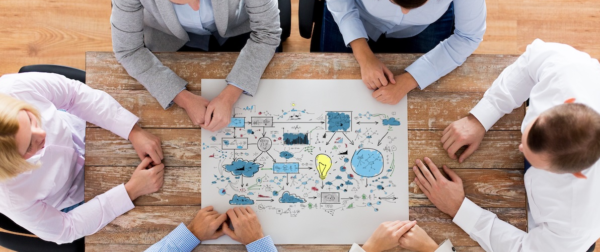
In most organisations, change begins with a meeting, not a workshop.
It might be an idea, a frustration or someone coming up with a new way of doing things. It could be a directive from your boss. But things need to change, and often this starts with a meeting. A group of people talking about what needs to change, why and how it is going to happen.
This is why a workshop is a vital meeting.
In the last 30 years, no matter when any of the Think Organisation team lead or facilitated change, which actual meeting it started in can be very hard to identify. It can also be the seed which decides whether change is successful or unsuccessful.
Leaders talk about collaboration, resilience and great communication, but in the real world, real behaviour change doesn’t happen in the meeting room. It happens after the meeting. It happens in the way people behave when no one is watching, or the way in which people are driven. Real change happens when people experience something that reshapes how they think, feel, and relate to others.
In our opinion, a meeting is so often where people talk about work, but often little changes post meeting. In fact, from our extensive experience it is a professionally facilitated workshop, where people are empowered to actively solve problems and work together that real change, including behaviour changes can be sparked.
This is why workshops remain one of the most powerful tools for changing behaviour at work, especially when they blend science, creativity, and experience.
Even the name “workshop” highlights the importance of working with your hands to learn practical skills through doing. So the next time you are in a workshop at work – is it really a workshop? And will it really facilitate behaviour change?
Why Behaviour Change Needs Experience, Not Just Information
Traditional training often focuses on transferring knowledge: slides, models, frameworks. But the brain doesn’t change through knowing, the brain changes through doing.
Neuroscience shows that learning sticks when it engages multiple regions of the brain simultaneously. This includes the prefrontal cortex (thinking and planning), the limbic system (emotion and memory), and the motor cortex (movement and coordination). When we involve the body, we involve the whole brain.
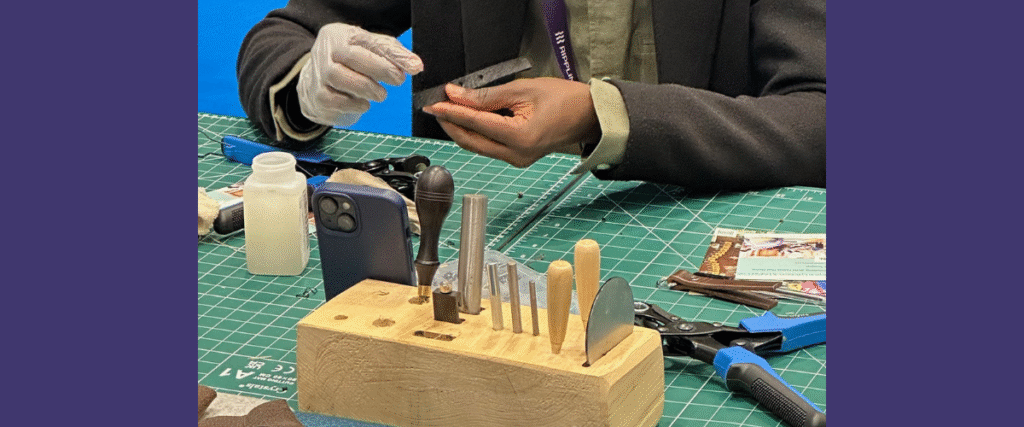
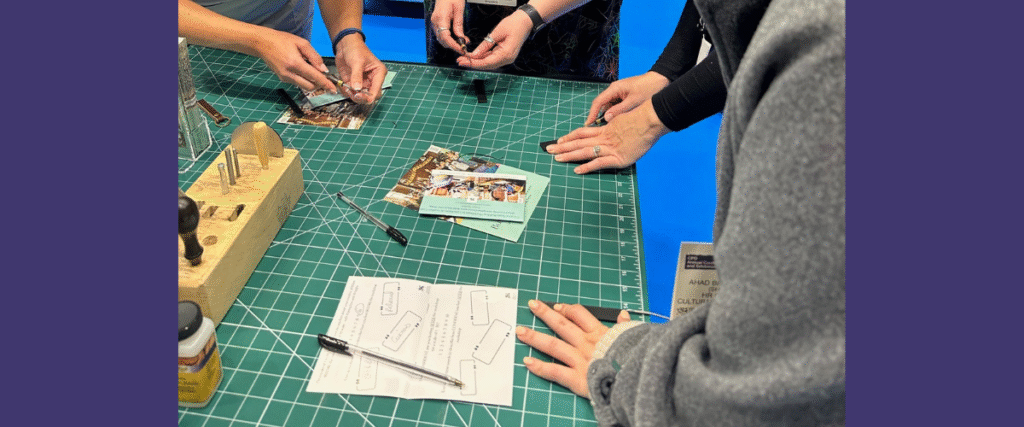
That’s why creative, hands-on workshops, such as leatherwork, paracord weaving, building or woodcraft, can transform learning into something far more meaningful. They anchor abstract ideas in physical experience, helping people feel what collaboration, patience, or focus actually mean.
The Power of Working Together, Alone
In group workshops, each person often works on their own creation. It may be a piece of leather, or a paracord bracelet, or a noticeboard. They are absorbed in their own process, yet surrounded by others doing the same.
This balance, working together, alone, activates a fascinating blend of brain activity.
The default mode network (DMN), responsible for self-reflection and creativity, comes online during solitary, mindful tasks. But at the same time, the social brain network remains engaged because of the shared environment. As humans we are subconsciously attuned to others’ presence, rhythm, and energy.
The result is a state of quiet connection. Individuals find focus and flow, while the group synchronises emotionally and cognitively, which is a phenomenon psychologists call interpersonal neural synchrony. This shared state builds trust, empathy, and belonging without a single “team-building” exercise in sight.
So no more awkward role plays where you just want the ground to swallow you up as your try to solve team communication challenges.
Why Hands-On Change Activities Work
Take leatherwork. It requires patience, precision, and acceptance of imperfection which are all qualities that mirror the emotional regulation and adaptability needed in leadership.
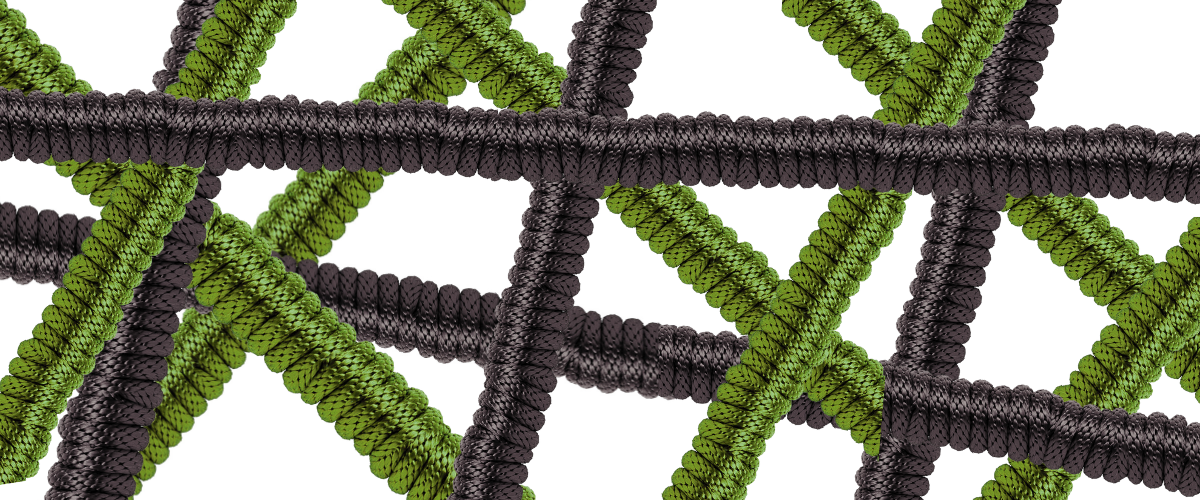
Or paracord weaving, this is a practical metaphor for resilience and connection. Each strand alone is weak. However, woven together, they form something far stronger.
As teams reflect on that process, the metaphor becomes tangible. As does the paracord bracelet they leave with at the end of the activity.
From a neuroscience perspective, such tactile activities release dopamine, reinforcing learning through pleasure, and oxytocin, deepening social connection. This blend of chemistry and cognition is the foundation for long-term behavioural change.
From Awareness to Action – Why Workshops Matter
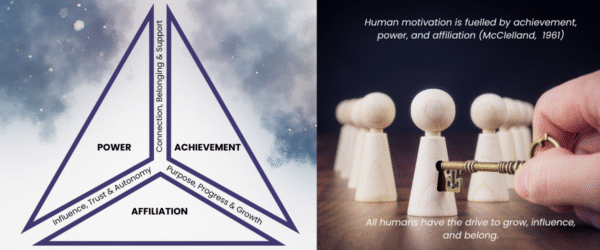
Workshops that blend reflection, creativity, and science follow the natural stages of behavioural change:
-
- Awareness – understanding what needs to shift.
- Experimentation – trying new approaches in a safe, supported space.
- Commitment – translating insight into action back at work.
By engaging the senses, emotions, and intellect, creative workshops can help enable these changes to stick.
Think Organisation workshops don’t just tell people to change, they let them experience change in a way they want to do it again and again – because it feels positive.
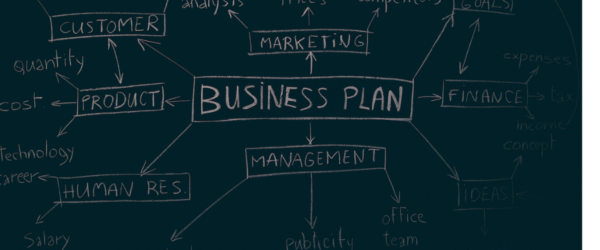
As experts in culture, the Think Organisations team knows that culture doesn’t shift because of a strategy document. Culture shifts because people start to behave differently together.
This is why, for the last three decades we have created spaces where teams can explore, create, and connect. It might be lego, spaghetti bridges or something more tangible like leatherwork. Because, whether through conversation or craft, we ensure teams activate the very systems in the brain that underpin trust, learning, and collaboration.
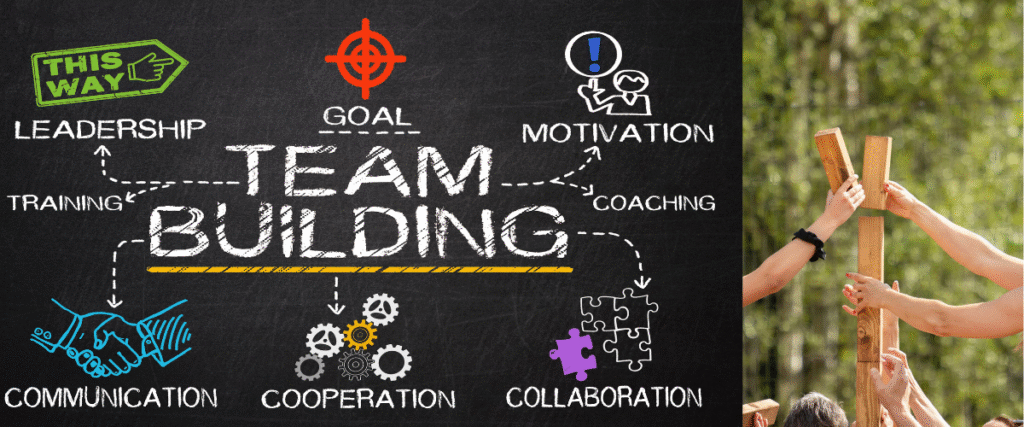
Workshops like these remind us that change isn’t always loud or linear. Sometimes, it begins quietly, in the rhythm of hands at work, the calm of focused attention, and the simple act of working together, alone.
Our Expert Change Takeaways Include:
-
- Behaviour change begins with experience, not instruction. Because people remember what they feel and create more than what they are told.
-
- Working together, alone creates a powerful neurological balance building both individual reflection and social connection, whilst providing opportunities to explore team dynamics
-
- Hands-on activities like leatherwork and paracord weaving embody core leadership qualities: patience, precision, resilience, and collaboration. Everyone needs to be open to learn.
-
- Emotional engagement and sensory learning drive dopamine and oxytocin release, both key ingredients for trust, motivation, and memory.
-
- Culture is learned through doing. When teams experience new ways of working together, they carry those behaviours back into everyday life. It is much easier to liken how a team builds a flat pack ikea bookcase together and give feedback to each other than it is when it is a complex business problem, shrouded in emotion.
If you are ready to explore how creativity and neuroscience can unlock new ways of thinking, feeling, and leading then please join us.
🧠 Think Organisation partners with Semper Hopkins to design immersive, evidence-based workshops that help teams reconnect, refocus, and reimagine how they work together. We also work with travel agencies, outward bound and other immersive venues to provide innovative and suitable workshop experiences which deliver ROI for your organisation.
📩 Book time with Sarah Clarke to explore how a bespoke workshop could help your team build stronger habits, deeper trust, and lasting behavioural change or read our package offerings with Semper Hopkins here.